October 07, 2012

MENTAL ILLNESS — Part III


We are pleased to publish the third and final section of our 2012 Blog on Mental Illness.  We appreciate all the positive feedback we received and hope that this has been a helpful resource for our readers. 

Self Injury:

Self-harm is a way of expressing and dealing with deep distress and emotional pain. As counter-intuitive as it may sound to those on the outside, hurting yourself makes you feel better. In fact, you may feel like you have no choice. Injuring yourself is the only way you know how to cope with feelings like sadness, self-loathing, emptiness, guilt, and rage. 
The problem is that the relief that comes from self-harming doesn’t last very long. It’s like slapping on a Band-Aid when what you really need are stitches. It may temporarily stop the bleeding, but it doesn’t fix the underlying injury. And it also creates its own problems.  

If you’re like most people who self-injure, you try to keep what you’re doing secret. Maybe you feel ashamed or maybe you just think that no one would understand. But hiding who you are and what you feel is a heavy burden. Ultimately, the secrecy and guilt affects your relationships with your friends and family members and the way you feel about yourself. It can make you feel even more lonely, worthless, and trapped.

Self-injury can indicate a number of different things. Someone who is hurting themselves may be at risk of suicide. Others engage in a pattern of self-injury over weeks, months or years and are not necessarily suicidal.


Suicide:


Suicide is rarely a spur of the moment decision. In the days and hours before people kill themselves, there are usually clues and warning signs. The strongest and most disturbing signs are verbal – "I can’t go o" "Nothing matters any more" or even "I’m thinking of ending it all."   Such remarks should always be taken seriously.

Other common warning signs include:
·       Becoming depressed or withdrawn
·       Behaving recklessly
·       Getting affairs in order and giving away valued possessions
·       Showing a marked change in behavior, attitudes or appearance
·       Abusing drugs or alcohol
·       Suffering a major loss or life change

The following list gives more examples, all of which can be signs that somebody is contemplating suicide. Of course, in most cases these situations do not lead to suicide. But, generally, the more signs a person displays, the higher the risk of suicide.

Experts in the field suggest that a suicidal person is feeling so much pain that they can see no other option. They feel that they are a burden to others, and in desperation see death as a way to escape their overwhelming pain and anguish. The suicidal state of mind has been described as constricted, filled with a sense of self-hatred, rejection, and hopelessness.
It is best to treat talk and threats about suicide seriously. Research indicates that up to 80% of suicidal people signal their intentions to others, in the hope that the signal will be recognized as a cry for help. These signals often include making a joke or threat about suicide, or making a reference to being dead. If we do take them seriously and ask them if they mean what they are saying, the worst that can happen is we will learn that they really were joking. Not asking could result in a far worse outcome.
Research suggests that 70 to 90 per cent of people who have made a lethal attempt, or died by suicide, were suffering from one or more unmanaged mental health issues – such as protracted depression or anxiety, bi-polarity, psychosis, and/or substance abuse. While the presence of an unmanaged mental health issue is strongly associated with suicide, it is important to note that most people assessed with a mental illness are not at risk of suicide, and that few suicides are wholly the result of a mental illness.
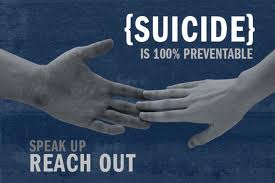
If you suspect someone may be at risk of suicide, it is important to ask them directly about suicidal thoughts. Do not avoid using the word ‘suicide’. It is important to ask the question without dread, and without expressing a negative judgment. The question must be direct and to the point. For example, you could ask “Are you having thoughts of suicide?” or “Are you thinking about killing yourself?”  If you appear confident in the face of the suicide crisis, this can be reassuring for the suicidal person.

Although some people think that talking about suicide can put the idea in the person’s mind, this is not true. Another myth is that someone who talks about suicide isn’t really serious. Remember that talking about suicide may be a way for the person to indicate just how badly they are feeling.

Violence:

People with psychotic symptoms, particularly paranoia, have been found to be at higher risk of physical aggression toward others. Physical violence in hospital has been reported in approximately 20% of samples studied. Typically, a small number of patients (e.g. 5%) are found to be responsible for just over half of all violent incidents and more than half of the serious injuries.
A number of studies have examined the relationship of specific diagnoses to violence within populations of psychiatric inpatients. The major issue addressed by this avenue of research is what kinds of mental illnesses predict violence and criminality among mentally ill populations, not whether mental illness, per se, predicts criminality and violence. 
Perhaps the most consistent and striking finding is the association of substance abuse disorders (alcohol and/or drug) with violence and criminality, and the lack of or small association between other disorders (e.g. schizophrenia, affective disorders, or anxiety disorders) with violence.

Mental Illness in Canada
20% of Canadians will personally experience a mental illness during their lifetime.  The economic cost of mental illnesses in Canada was estimated to be at least $7.331 billion in 1993.

During their lifetime about 1 in 10 people in Canada will experience an episode of major depressive disorder (the diagnosis given to those suffering from depression). Unfortunately many people, unaware of how common depression is, avoid seeking treatment because they worry what others will think of them. They feel like they’re the only ones. Depression is in fact a widespread medical condition.

Schizophrenia affects 1% of the Canadian population; 52% of hospitalizations for schizophrenia in general hospitals are among adults 25-44 years of age.

Anxiety disorders affect 12% of the population, causing mild to severe impairment. The highest rates of hospitalization for anxiety disorders in general hospitals are among those aged 65 years and over.

It is estimated that about 6% to 9% of the population has a personality disorder.  Anti-social personality disorder is frequently found among prisoners (up to 50%).  Suicide accounts for 24% of all deaths among 15-24 year-olds and 16% among 25-44 year-olds. In 1998, 3,699 Canadians died as a result of suicide.


If anyone has questions or concerns not addressed in this blog, or you just need someone to talk to, the Association of BC Mental Health Information & Crisis Line is open 24/7 at 310-6789 (no area code required).


This concludes our three part blog on Mental Illness; we put a lot of research into its writing so we could share an up-to-date and thorough review of current Mental Health issues without being weighed down with too much medical terminology.

If there are any topics of interest our readers would like us to address in the near future, please do not hesitate to send your ideas and requests to Margot@ShyloNursing.caMargot@ShyloNursing.ca


Excerpts:
http://www.bcss.org/category/resources/about-mental-illness/psychosis
http://www.mooddisorderscanada.ca/page/elephant-in-the-room-campaign


September 14, 2012

MENTAL ILLNESS — Part II


There are so many stereotypes and myths in society today relating to mental illness and the people that suffer from it, so we have decide to do a three part feature on mental illness in our blog.  Part I (below this blog) provided a brief introduction to Mental Illness and review Anxiety and Mood disorders.  Part II will review Personality Disorders, Psychosis, Schizophrenia, and Schizoaffective Disorder.  

Personality Disorders:

People with personality disorders have chronic, pervasive problems managing life’s ups and downs. People with personality disorders suffer life-altering, negative, consequences in social, career and family arenas. There are a range of personality disorders which include: Borderline Personality Disorder, Antisocial Personality Disorder, Narcissistic Personality Disorder, Dependent Personality Disorder, Schizoid Personality Disorder, Obsessive-compulsive Personality Disorder, Paranoid Personality Disorder, Histrionic Personality Disorder, Avoidant Personality Disorder and finally, Schizoidal Personality Disorder. We will not go into a description of each type of disorder but will give a general description of the common manifestations of personality disorders.
Some of the characteristics in common with all personality disorders are trouble maintaining relationships, disturbances in self image, difficulty with impulse control, and with managing strong emotions in a healthy way. People with personality disorders can seem over-the-top emotionally; often their emotions and behaviour seem way out of proportion to the situation and can lead to conflict with others. People with personality disorders can seem rigid in their thinking and often denigrate themselves; often people with personality disorders do not accept themselves, their reactions and their situations.
Some of the symptoms of personality disorders are: stormy relationships; frequent mood swings; social isolation; angry outbursts; difficulty making friends; suspicion and mistrust of others; problems with impulse control; and substance abuse problems.

Psychosis:

Psychosis is a word used to describe medical conditions that affect the brain, so that what a person thinks is real is different from what other people think is real. Although we don’t completely understand what causes psychosis, many medical researchers think that people are born with a vulnerability or tendency towards psychosis. This doesn’t mean they’ll automatically become ill, but that if the person is exposed to enough stress it can trigger psychosis. Psychosis is a medical condition and it can be treated. Many people recover fully after they are ill with psychosis for the first time and never have it again. Others may have more during the course of their life. Almost all people with psychosis improve with treatment.

The brain is a part of your body, and it can get sick too. Psychosis is a serious brain illness. When a person has psychosis, what they think is real is not the same as what other people think is real.

Some doctors think certain people are born with the possibility of getting psychosis. Some people are born with the same genetic risk but never get psychosis. The ones that do get psychosis may also experience a “trigger”. Triggers may be stresses like a sad life event, injury, illness or street drug use. A person with a family history of mental illness is more likely to get psychosis if they also have a “trigger”.

Schizoaffective disorder:

Schizoaffective disorder is an illness that combines the symptoms of schizophrenia and a mood disorder. Schizoaffective disorder is one of the most challenging disorders to diagnose because of the combination of schizophrenia and bipolar mood symptoms; symptoms which can present as schizophrenia, major depressive disorder or bipolar disorder. According to the Encyclopedia of Mental Disorders, because of the difficulty diagnosing this illness there are no statistics on incidence rates. Moreover, “The proportion of schizoaffective disorder identified in persons undergoing treatment for psychiatric disorders has ranged from 2% to almost 30%, depending on the study cited. ” 

There are two main types of schizoaffective disorder; bipolar and depressive. People with schizoaffective disorder may present psychotic-type symptoms such as paranoid delusions, hallucinations, distorted thinking and speaking, and mania. Schizoaffective disorder with depression includes bouts of major depression presenting in combination with psychotic symptoms. Women seem more prone to the disorder, which is generally diagnosed in early adulthood. Sometimes adolescents are diagnosed with this illness after an initial diagnosis of bipolar disorder has been incorrectly made; again, the symptoms of mania can imitate psychosis.

Misdiagnosis of this illness is common in both adolescents and adults because the illness is so complex. When symptoms of bipolar disorder, psychosis and depression are all present, it may be difficult for clinicians to sort them out. In terms of prognosis, despite the severity of symptoms, the effects of this illness are generally episodic in nature and, compared to the diagnosis of schizophrenia, the outcome is more favorable.

Schizophrenia:

Schizophrenia is characterized by a broad range of unusual behaviors that cause profound disruption in the lives of people suffering from the condition, as well as in the lives of the people around them. Schizophrenia strikes without regard to gender, race, social class or culture.

Schizophrenia is a complex illness. Mental health experts are not sure what causes it. However, genes may play a role. Certain events may trigger schizophrenia in people who are at risk for it because of their genes. You are more likely to develop schizophrenia if you have a family member with the disease.

Schizophrenia affects both men and women equally. It usually begins in the teen years or young adulthood, but it may begin later in life. It tends to begin later in women, and is more mild. Childhood-onset schizophrenia begins after age 5. Childhood schizophrenia is rare and can be hard to tell apart from other developmental problems in childhood, such as autism.


Do You Have Schizophrenia Quiz? http://psychcentral.com/quizzes/schizophrenia.htm


Part III will review Self Injury, Suicide and Violence, and end with a synopsis of Mental Health issues in Canada today (to be posted in two weeks).

The stigma attached to mental illnesses presents a serious barrier not only to diagnosis and treatment but also to acceptance in the community.  We hope that by sharing a little information we can do our small part to educate some people not familiar with, or have lingering questions about, mental illness.


August 29, 2012

MENTAL ILLNESS — Part I


There are so many stereotypes and myths in society today relating to mental illness and the people that suffer from it, so we have decided to do a three part feature on mental illness in our blog.  Part I will provide a brief introduction to Mental Illness and review Anxiety and Mood disorders.  Part II will review Personality Disorders, Psychosis, Schizophrenia, and Schizoaffective Disorder.  Part III will review Self Injury, Suicide and Violence, and end with a synopsis of Mental Health issues in Canada today.

The stigma attached to mental illnesses presents a serious barrier not only to diagnosis and treatment but also to acceptance in the community.  We hope that by sharing a little information we can do our small part to educate some people not familiar with, or who have lingering questions about, mental illness.

What Is Mental Illness:

Mental illnesses takes many forms, just as physical illnesses do. Unfortunately, many people still misunderstand and fear mental illness; hopefully the fear and shame will diminish as society learns the truth about mental health issues and discusses them openly. If you, or someone you know, has a mental illness, there is good news: all mental illnesses can be treated.

We are not just physical bodies. Our mental health is just as important as our physical health, the two are very much dependent on each other.  Our mental health directly affects our physical health, and vice versa. People with physical health problems may experience anxiety or depression that can affect their recovery. Similarly, mental health challenges increase the risk of developing physical problems such as:

  • diabetes
  • heart disease
  • weight gain or loss
  • gastrointestinal problems
  • reductions in immune system efficiency
  • blood biochemical imbalances
Mental illnesses are characterized by alterations in thinking, mood or behaviour (or some combination thereof) associated with significant distress and impaired functioning. The symptoms of mental illness vary from mild to severe, depending on the degree of illness, the individual, their family and socio-economic environment.

Types of Mental Illness:

Anxiety Disorders: 

Generalized Anxiety Disorder is a condition where you experience chronic and debilitating anxiety and/or worry.  The level of your anxiety is out of proportion compared to the likelihood the potential event will actually occur. The anxiety affects your ability to complete your normal activities of daily living at work, home, school, and can even interfere with personal relationships. Anxiety can also cause physical symptoms such as stomach pains, dizziness, forgetfulness, numbness, agitation, shortness of breath, and chest pain.
Obsessive-Compulsive Disorder is a condition where you experience thoughts, images or impulses that are very disturbing to you and make you feel anxious (obsessions). You may need to repetitively perform specific acts (rituals) to make yourself feel better or relieve the feelings of anxiety (compulsions).
Panic attacks are intense episodes of fear that often occur for no apparent reason and can peak in ten minutes or less. They happen when your built-in alarm system gets activated and your body prepares to fight or run for your life through a survival mechanism called the ‘Fight or Flight’ response. When this alarm system gets triggered you are likely to experience a series of physical and cognitive symptoms which can be overwhelming such as trembling, heart palpitations, hot or cold flashes, a choking sensation or a fear of going crazy.
Post- Traumatic Stress Disorder (PTSD) can develop after you have been exposed to traumatic events that cause you to experience distressing psychological symptoms which can then become disabling to you. Events that can cause PTSD include being involved in an accident, sexual or physical assault, extreme weather events (Hurricane Katrina), witnessing a serious injury or death, having a near death experience or the feeling you almost died, being exposed to repetitive trauma like serving in active duty, etc.
Social Anxiety Disorder (or Social Phobia) is the most common anxiety disorder. It’s a condition which involves being afraid of being judged negatively by others and results in feelings of embarrassment and humiliation.  Your fears of about what others will think are out of proportion to reality, and even if you are aware, it will still worry you and cause enough anxiety that you’ll want to try and avoid social situations.
Phobias: Many of us are afraid of snakes and spiders (myself certainly included in that demographic), but most of us can manage our fears. On the other hand, phobias can cause a level of fear that is unmanageable can be quite disabling and you may experience considerable distress. For example, a fear of flying could result in your not being able to travel for your job and therefore you might have to pass up a much wanted promotion. A fear of snakes could result in not going on family outings to the park and/or not using the basement of your own home.
Attention Deficit Disorders:

Attention deficit hyperactivity disorder (ADHD) is a disorder characterized by a an inability to concentrate, sometimes combined with hyperactivity-impulsivity that is persistent, developmentally inappropriate, and occurs in at least two different settings.

ADHD, also known as attention deficit disorder (ADD) or hyperkinetic disorder, has been around a lot longer than most people realize.  In fact, a condition that appears to be similar to ADHD was described by Hippocrates, who lived from 460 to 370 BC.

Mood Disorders:

Mood disorders affect about 10% of the population. Everyone experiences normal “highs” and “lows” in life, but people with mood disorders experience them with greater intensity and for longer periods of time than most people.

Depression is the most common mood disorder that presents with depressed mood, loss of interest or pleasure, feelings of guilt or low self-worth, disturbed sleep, constant tiredness, an inability to have fun, poor concentration, and thoughts of death or suicide. These problems can become chronic or recurrent and lead to substantial impairments in an individual's ability to take care of his or her everyday responsibilities and feelings of hopelessness. At its worst, depression can lead to suicide, a tragic fatality associated with the loss of about 850,000 lives every year (as per the WHO).
Dysthymia is characterized by depressive symptoms present most of the day for two years or more in adults and for one year or more in children and adolescents. In children diagnosed with this illness, irritability as opposed to depression may be present. Dysthymia is different from major depressive disorder because of the chronic, long term nature of the illness and because there are fewer depressive symptoms (two or three) than in major depressive disorder (four or more symptoms). Often people suffering from dysthymia have experienced depressive symptoms like hopelessness, poor concentration, sleep disturbances and low motivation for years, but have never been diagnosed with depression; for some the symptoms begin to feel like a chronic state of being. People with dysthymia may appear outwardly to be coping well enough, but seem very unhappy most, if not all, of the time.
Bipolar disorder (historically known as manic depression) causes serious shifts in mood, energy, thinking, and behavior–from the highs of mania on one extreme, to the lows of depression on the other. More than just a fleeting good or bad mood, the cycles of bipolar disorder last for days, weeks, or months. And unlike ordinary mood swings, the mood changes of bipolar disorder are so intense that they interfere with your ability to function. It is a serious condition; the mania often causes sleeplessness, sometimes for several days,  hallucinations, delusions, paranoid rage and possibly even psychosis.
People are frequently confused what the differences is between a clinical depression and manic depression and it’s not surprising as they both have the word depression in their names. That’s one of the reason’s manic depression’s clinical name changed to “bipolar disorder” many years ago, to clearly distinguish it from regular depression.
Postpartum depression.  Having a baby is a challenging time, both physically and emotionally for all women and some degree of emotional vulnerability is natural and expected after childbirth.  It’s natural for new mothers to have mood swings after delivery, feeling joyful one minute and overwhelmed the next. These feelings are sometimes known as the "baby blues" and usually go away within a few days after the birth. However, some women may experience a deep and ongoing depression which lasts much longer; this is postpartum depression and can begin any time during the first two months after you give birth.
If you feel depressed after the birth of your child, tell someone you trust about how you feel.  Call a sympathetic friend, join a mothers' group for support, or chat with moms about postpartum depression in the BabyCenter Community.  You may be surprised at how many women are experiencing similar feelings. If you have a supportive partner, make sure they know what's going on and how they can help.
Seasonal Affective Disorder (SAD). Weather often affects people’s moods. Sunlight breaking through clouds can lift our spirits, while a dull, rainy day may make most of us feel quite gloomy. These mood shifts generally do not affect our ability to cope with daily life but some people are vulnerable to a type of depression that follows a seasonal pattern.  For them, the shortening days of late autumn are the beginning of a type of clinical depression that can last until spring; this condition is called “Seasonal Affective Disorder," or SAD.  
We will post Part II and Part II of our Mental Health series in the coming weeks so stay tuned and please feel free to post your comments below or email them in confidence  HERE